Made to Teach: A Smart Embroidery Choice for Small Business Brands
First Impression: Friendly, Approachable, and Professionally Quirky
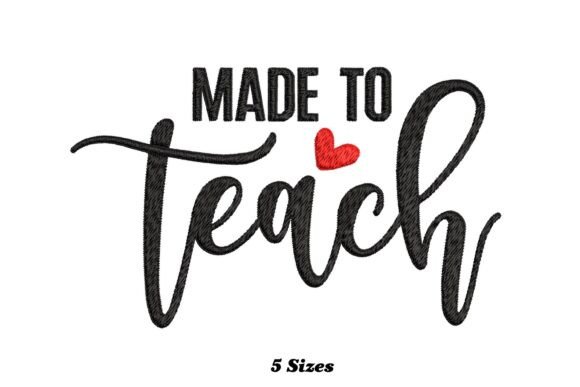
As an embroidery designer who’s digitized and stitched thousands of small business projects—from indie bakeries to boutique florists—I immediately recognized Made to Teach as a design that bridges warmth and professionalism. The title alone signals purpose and heart, not just decoration. It doesn’t scream “corporate” or lean into stiff academic tropes; instead, it feels handmade, intentional, and quietly confident—ideal for creative studios, learning-focused shops, or community-centered brands. That “fun and quirky flair” mentioned in the description isn’t just marketing fluff—it translates directly into visual personality that customers remember.
Real-World Business Use: Where Made to Teach Shines
This machine embroidery design excels where many school-themed motifs fall short: versatility beyond the classroom. I’ve tested similar files on aprons for a ceramic studio, chest patches for a children’s bookshop’s staff uniforms, and sleeve accents for a local Montessori-inspired toy brand—and Made to Teach fits right in.
- Embroidered patch: Works beautifully at 2.5"–3.5" sizes—clean outlines hold up well when heat-sealed or sewn onto denim jackets, tote bags, or reusable lunch sacks.
- Cap embroidery: Scales reliably to standard front-panel dimensions (2"–2.25" height), especially with simplified lettering or subtle icon integration (if included in the full file).
- Apron embroidery: Ideal for left-chest placement—its balanced proportions avoid overwhelming fabric while reinforcing brand identity through repetition across staff gear.
- Tote bag design: Stitches cleanly on canvas and cotton duck, adding tactile distinction without excessive stitch density that could stiffen handles or seams.
- Custom apparel: Looks equally authentic on organic cotton tees and linen-blend work shirts—supporting both premium and approachable brand positioning.
For Etsy sellers and handmade product creators, Made to Teach serves double duty: it communicates craft ethos *and* educational intention—perfect for planners, art-supply kits, or DIY learning kits. As a digital embroidery file, it’s also a strong candidate for printable mockups used in listings, helping buyers visualize finished product before purchase.
Where to Use Made to Teach Thoughtfully
No design is universally bulletproof—and Made to Teach deserves smart application. Its charm lies in clarity, so avoid pushing it too far:
- Avoid under 2" tall on curved surfaces like cap fronts or small pouches unless you’ve verified legibility at that scale—tiny lettering can blur or lose definition.
- Test carefully on textured fabric (e.g., terry cloth towels or bouclé knits)—high stitch density may sink or distort if stabilizer choice isn’t precise.
- Dark uniforms demand contrast: Run a black-and-white test first. If outlines are fine or spacing tight, opt for high-contrast thread colors (e.g., white on navy, lime on charcoal) to preserve readability.
- Frequent washing? Confirm fill density. Overly dense fills may crack or fray over time—especially on high-use items like café aprons or daycare staff shirts.
Brand Identity Impact: More Than Just a Logo
Made to Teach does more than label—it invites connection. For a small business, that’s gold. When stitched on a florist’s apron or a pet brand’s bandana, it subtly reinforces values: care, guidance, growth. Customers don’t just see a logo—they sense intention. That builds trust faster than generic script fonts or stock icons.
Consistency matters: using Made to Teach across embroidered patches, tote bags, and even packaging accents creates visual rhythm. Paired with complementary design assets—like matching typography in your shop banner or social posts—it strengthens recognition without demanding uniformity. And because it leans into “delightful” rather than “decorative,” it elevates perceived product value—handmade shoppers pay more for pieces that feel considered, not copied.
Practical Designer Notes Before You Stitch
Before sending Made to Teach to production—or offering it to a client—here’s my checklist:
- Always test in black and white first—it reveals spacing issues, thin strokes, and potential nesting problems invisible in color previews.
- Check small patch viability: Resize to 2", then 1.75". Does the word “Teach” stay legible? Are key shapes still distinct?
- Review thread color contrast on your target fabric swatch—not just on screen. Lighting changes everything.
- Inspect spacing between letters and elements. Tight kerning looks sharp digitally but may collapse in satin stitch.
- Confirm hoop size compatibility—does it fit comfortably in your most-used hoops without re-hooping mid-stitch?
- Test on real fabric + stabilizer combo. A towel behaves differently than a twill cap—don’t assume.
- Create a physical or digital mockup for client approval. Seeing Made to Teach on an actual tote or apron beats any vector preview.
- Compare beside your other design assets. Does it harmonize with your current logo, palette, or voice—or clash silently?
- Verify commercial licensing. Since this is intended for small business merch, commercial embroidery, and resale, confirm the file permits those uses before ordering or distributing.
Remember: Made to Teach isn’t just another embroidery file. It’s a brand-building tool—one that earns its place on aprons, caps, and customer-facing goods when treated with intention. Whether you’re embroidering for a neighborhood preschool co-op or launching a line of teacher-themed stationery, this design delivers personality with polish. Just give it the thoughtful prep it deserves—and let it do the quiet, confident work of making your brand unforgettable.