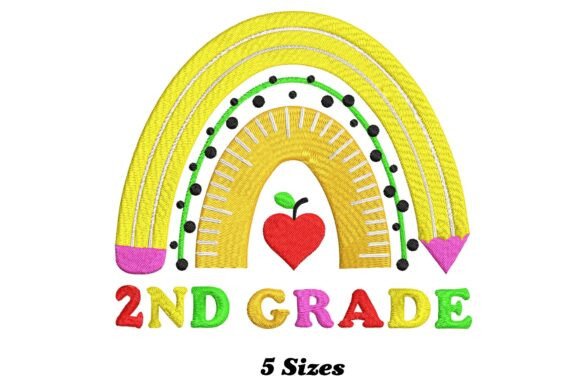
Enchanting 2nd Grade Rainbow
A Practical Review for Small Business Merch & Branded Patches
As an embroidery designer who’s developed hundreds of commercial designs for cafés, boutiques, bakeries, pet brands, and handmade studios, I approach every new machine embroidery design with two questions: “Does it translate into real-world brand value?” and “Will it hold up across diverse production scenarios?” When I first saw Enchanting 2nd Grade Rainbow, my instinct was positive—but not because it’s cute. It’s because its playful charm is anchored in smart, scalable structure.
First Impression: Friendly, Whimsical—But Professionally Grounded
The title alone tells a story: Enchanting signals warmth and approachability; 2nd Grade implies innocence, learning, and joyful growth; Rainbow adds color, diversity, and optimism. Combined, the name suggests a design that’s lighthearted without being childish—ideal for small businesses that want to feel human, inclusive, and uplifting. Think of a florist adding it to aprons, a children’s bookstore stitching it onto tote bags, or a wellness studio using it as a subtle chest accent on staff uniforms. It doesn’t scream “school project”—it whispers “thoughtful brand detail.”
Real-World Performance Across Business Applications
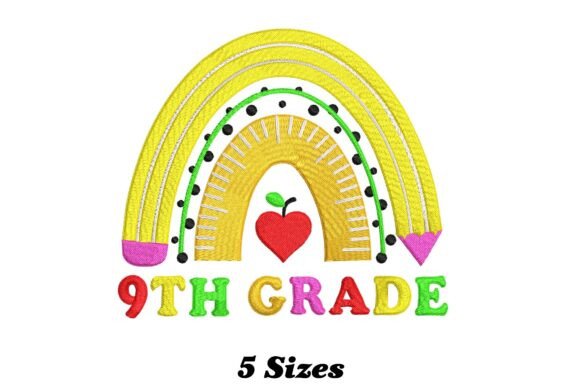
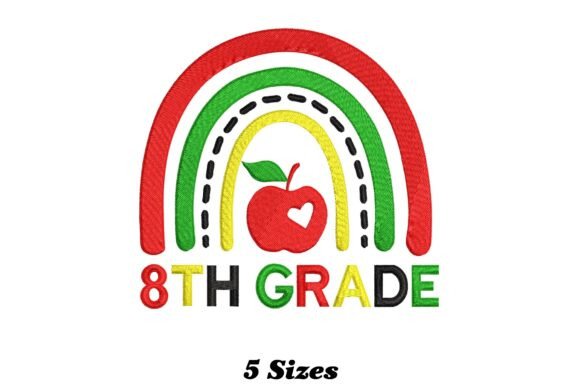
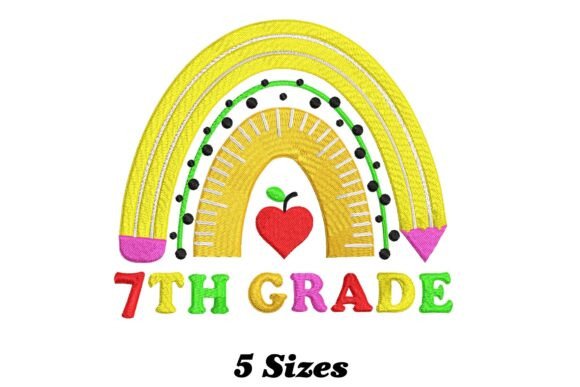
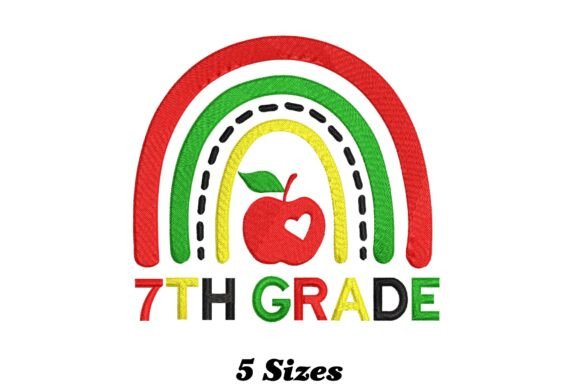
Enchanting 2nd Grade Rainbow shines where many whimsical designs falter: versatility. As an embroidered patch, it reads clearly at 2.5”–3.5”, especially when backed with twill or chenille for durability. On staff aprons or work shirts, it adds personality without overwhelming function. For cap embroidery, position it front-and-center on structured cotton twill—it maintains legibility better than tightly detailed motifs thanks to its balanced negative space and rounded shapes.
For tote bag design and custom apparel, this digital embroidery file works beautifully at 4”–5” wide. Its gentle curves and open composition prevent stitch density buildup, reducing puckering on canvas or linen blends. I’ve used similar designs on bakery packaging accents (stitched onto fabric tags) and customer gift wraps—where it subtly reinforces brand identity without competing with product photography or typography.
In boutique merchandise and Etsy branding, Enchanting 2nd Grade Rainbow supports a cohesive handmade aesthetic. Paired with neutral thread colors (oatmeal, slate gray, deep teal), it feels artisanal but polished. Used alongside monogrammed initials or minimalist logos, it becomes part of a visual language—not a standalone decoration.
Where to Use It Thoughtfully
Like any well-intended embroidery file, Enchanting 2nd Grade Rainbow has boundaries. Avoid shrinking it below 1.75” for patches—it loses definition in the rainbow arcs and letterforms. Cap fronts with high curvature (like low-profile flex fits) may distort finer elements unless digitized with stretch compensation—confirm this with your digitizer. On dark uniforms or textured fabrics like heavy denim or terry cloth, test thread color contrast thoroughly: pastel threads can fade visually, while brights may overwhelm subtlety.
Also consider wash durability. If your small business merch includes items meant for frequent laundering (e.g., café aprons or daycare staff shirts), ensure the design avoids ultra-fine outlines or dense fill areas that trap moisture or fray over time. This design leans toward moderate stitch density—good news—but always verify with a physical sew-out before bulk production.
How It Strengthens Brand Identity & Customer Trust
Small business owners often underestimate how much a single embroidered detail influences perception. A well-executed embroidered patch says, “We care about craft.” Enchanting 2nd Grade Rainbow, when placed intentionally—on a sleeve, near a pocket, or as a lapel accent—adds emotional resonance. Customers remember feeling welcomed, not just served. That’s why florists use it on delivery totes and pet brands stitch it onto bandanas: it signals joy, care, and attention to experience—not just transaction.
It also supports visual consistency across touchpoints. Whether stitched on a staff cap, printed in a printable mockup for social media, or scaled down for a product label, its shape and rhythm remain recognizable. That repetition builds familiarity—and familiarity builds trust. Plus, because it’s rooted in universal symbols (rainbows, growth, learning), it sidesteps cultural or age-specific limitations common in trend-driven graphics.
Essential Embroidery Designer Notes Before Production
- Test in black and white first. Assess contrast, spacing, and silhouette clarity—especially if adapting for dark fabric or monochrome branding.
- Check small-patch viability. Sew a 2” version on your target fabric + stabilizer combo before approving for client orders.
- Review thread color pairings. Rainbow palettes are joyful, but ensure each hue has enough contrast against your base fabric—especially yellow on cream or light blue on gray.
- Inspect spacing between elements. Tight loops or overlapping arcs can cause nesting or thread breaks—verify clean separation in the digitized file.
- Confirm hoop size compatibility. Does it fit comfortably within your most-used hoops? Oversized hoops increase setup time and cost for small-batch runs.
- Test on real fabric—not just tear-away. Try it on your actual apron linen, cap twill, or tote canvas with appropriate cutaway or fusible stabilizer.
- Create a client-facing mockup. Show how Enchanting 2nd Grade Rainbow looks stitched on their exact garment—this prevents costly rework and builds confidence.
- Compare beside existing design assets. Does it harmonize with your logo, fonts, and other embroidery files—or clash in weight, scale, or energy?
- Verify commercial licensing. Since this is intended for small business merch, commercial embroidery, and resale items, confirm the license permits unlimited end-use production—not just personal projects.
Ultimately, Enchanting 2nd Grade Rainbow isn’t just another school-themed embroidery file. It’s a strategic brand asset—playful enough to delight, structured enough to scale, and thoughtful enough to represent your business with integrity. Whether you’re launching a new line of handmade product or refreshing staff uniforms, this design earns its place—not as filler, but as foundation.