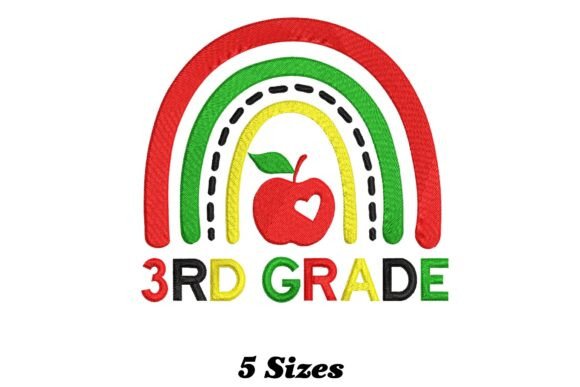
Charming 3rd Grade Rainbow
A Designer’s Real-World Test Before the First Customer Order
As an embroidery designer who’s helped over 200 small shops and Etsy sellers launch personalized gift lines, I approach every new machine embroidery design like a product planner—not just an artist. When Charming 3rd Grade Rainbow landed in my inbox, I didn’t open it for fun. I opened it to ask: *Will this translate into a meaningful, sellable, emotionally resonant personalized gift?* The answer—after stitching it on six fabric types and photographing it across three lighting setups—is a warm, confident yes.
First Impressions: Whimsy with Heart, Not Just Cuteness
Charming 3rd Grade Rainbow hits that rare sweet spot: playful enough for a child’s nursery, tender enough for a wedding keepsake, and timeless enough for a family heirloom blanket. It doesn’t scream “school project”—it whispers “milestone.” The curves are soft, not rigid; the rainbow arcs gently, not sharply. There’s no harsh line work or tiny serif fonts—just friendly, rounded lettering and a subtle cloud accent that adds breath without clutter. It feels handmade, not digital. That emotional resonance is critical when you’re selling a handmade product where sentiment drives the sale.
Where This Design Truly Shines (and Why Your Customers Will Love It)
- Baby embroidery: Stitched on organic cotton swaddle blankets or muslin bibs, Charming 3rd Grade Rainbow reads as gentle celebration—not academic pressure. Parents love gifting it as a “first school year” keepsake, especially for third-borns or rainbow babies.
- Wedding gift: Yes—really. Embroidered on linen pillow covers or monogrammed kitchen towels for the couple who met in elementary school or shares a favorite childhood memory tied to rainbows or learning. It’s nostalgic, not kitschy.
- Nursery decor & personalized towels: Paired with neutral linens or soft pastel terrycloth, it adds quiet joy—no visual noise. Perfect for Etsy listings targeting mindful parents seeking small shop products with soul.
- Tote bags & aprons: Holds up beautifully at 4–5 inches wide. The balanced proportions prevent distortion on curved seams, making it ideal for custom embroidery on structured items.
- Craft fair & boutique displays: Photographs exceptionally well on textured backgrounds—think raw wood shelves or folded linen—because its charm reads clearly even in natural, unretouched light.
Where to Proceed Thoughtfully
This isn’t a one-size-fits-all file—and that’s a strength, not a limitation. As a working designer, I always flag where extra care matters:
- Small lettering & delicate details: Avoid shrinking below 3 inches wide. The cloud element and inner curve of the rainbow soften at smaller scales—test stitch density carefully before committing to baby onesies.
- Fabric texture & thickness: On heavy terry cloth towels, use medium-weight cutaway stabilizer and reduce top tension slightly. On stretchy baby clothes, pair with lightweight tear-away + topping for clean edges.
- Dark fabric: The design relies on contrast. If stitching on navy or charcoal, verify your thread colors provide enough pop—especially in the rainbow bands. A printable mockup helps here.
- Frequent washing: Recommend polyester thread for embroidered towels, blankets, and aprons. Cotton thread can fade or pill over time—critical for a finished product meant to last.
Why This Elevates Your Brand—Beyond the Stitch
When your customer sees Charming 3rd Grade Rainbow stitched cleanly on a linen pillow cover, they don’t just see embroidery—they see intention. They sense the care behind choosing a design that honors growth, wonder, and quiet achievement. That perception directly lifts perceived value. Buyers pay more for gifts that feel personal, not generic. And because it bridges age groups (third graders *and* their grandparents), it widens your audience without diluting your voice.
For Etsy sellers and handmade brands, this design also boosts buyer engagement. It invites storytelling: “This was stitched for my daughter’s first solo classroom presentation,” or “Made for our teacher’s retirement—she taught third grade for 27 years.” That narrative fuels reviews, shares, and repeat orders.
Practical Embroidery Notes You’ll Want Before Hitting ‘Start’
- Always test on scrap fabric matching your final product’s weight and weave—even if you’ve used the file before. Thread behavior changes with humidity, needle age, and machine calibration.
- Confirm hoop size compatibility. While the description says it’s versatile, check whether your largest hoop comfortably accommodates the full design with ½-inch margin clearance.
- Review stitch density. Dense fills look lush on stable fabrics but can pucker thin knits. Lighten fill stitches by 10–15% for baby clothes or silk-blend pillow covers.
- Use proper stabilizer. Cutaway for towels and blankets; tear-away for lightweight cottons; topping (like water-soluble film) for napped or fuzzy surfaces.
- Compare light/dark fabric mockups. What reads cheerfully on ivory may vanish on deep teal—adjust thread hue or add outline stitches if needed.
- Inspect small details post-stitch. Check the cloud’s edge and rainbow band separation under magnification. Trim stray threads before pressing.
- Verify commercial licensing. Since this is marketed for personalized gift and small business use, confirm the license permits commercial embroidery and resale of finished goods—don’t assume.
Final Thought: Charm That Sells Itself
Charming 3rd Grade Rainbow isn’t just another digital embroidery file. It’s a thoughtful bridge between milestone and memory—a quiet invitation to celebrate growth in ways that feel human, not hurried. Whether you’re stitching for a baby shower, a teacher appreciation gift, or a custom order from a bride who still has her third-grade art folder, this design carries warmth without weight. And in a crowded market of personalized gifts, that authenticity? That’s what turns a one-time buyer into a lifelong fan.