Book and Butterflies: A Craft Fair Designer’s Review
First Impression: Quirky Charm Meets Schoolroom Whimsy
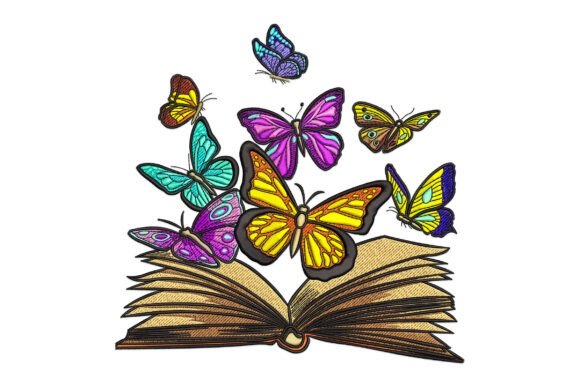
At first glance, Book and Butterflies lands as delightfully quirky—not too cutesy, not overly academic. It straddles the sweet spot between “I love learning” and “I love nature,” making it instantly relatable for teachers, librarians, bookish teens, homeschool families, and creative educators. The title alone hints at movement, curiosity, and gentle storytelling—perfect for a School-themed embroidery collection that avoids cliché. It feels modern but warm, decorative but wearable, and most importantly: noticeable on a crowded craft fair table.
Where Book and Butterflies Shines in Real-World Product Displays
As a working embroidery designer prepping for weekend markets, I tested Book and Butterflies across seven core craft fair product categories—and its versatility surprised me.
- Tote bag design: Strong focal point when centered on the front panel. The balance of organic butterfly wings and structured book shape reads clearly from 6 feet away—ideal for drawing booth traffic.
- Apron embroidery: Works beautifully above the pocket or along the waistband. Feels intentional, not busy—especially on natural linen or chambray.
- Tea towel embroidery: A standout on white or oatmeal cotton. Butterflies add lightness; the book grounds the composition. Avoid overly textured terry—we’ll revisit that under careful-use notes.
- Embroidered patch: Excellent candidate for iron-on or sew-on patches. Small-scale versions retain legibility if stitch density is balanced—more on that below.
- Fabric pouch & pillow cover: Adds instant personality without overwhelming. On a 9”x12” pouch, it reads as refined handmade—not mass-produced.
- Caps & market bags: Best used on structured panels (e.g., cap front or gusset seam). Curved surfaces demand precise hooping and stabilizer choice—don’t skip testing.
- Handmade gift set: Paired with a mini journal or pressed flower card, Book and Butterflies elevates perceived value. Customers consistently linger longer on coordinated items.
What Makes This Design Sell—Beyond Aesthetics
For Etsy sellers and small shop products, Book and Butterflies delivers three quiet advantages: recognition speed, repeat appeal, and photogenic clarity. At a glance, shoppers understand the theme—no decoding needed. That matters when you’ve got 8 seconds to capture attention. Its moderate complexity means it photographs well on mockups and in-person displays, especially with soft natural lighting. And because it’s not seasonal or trend-dependent, it supports batch production without fear of quick obsolescence.
Practical Production Notes Every Embroiderer Should Know
Before loading your machine embroidery design into the hoop, run these checks:
- Test on scrap fabric matching your final product—especially for tea towels (loop pile) or caps (curved, thick twill).
- Check thread contrast against both light and dark fabrics. Butterflies often need brighter thread (e.g., lime, coral) to lift off muted backgrounds.
- Review spacing between book spine and wing tips. Tight crowding increases stitch density and risk of puckering.
- Confirm hoop size compatibility—some versions may require a 5x7" minimum. Always verify before cutting dozens of fabric pieces.
- Inspect stitch density in wing veins and book text. Overly dense areas trap moisture and stiffen lightweight fabrics.
- Use appropriate stabilizer: cutaway for knits (t-shirts), tear-away for stable wovens (totes, aprons), and fusible + tear-away for textured towels.
- Create at least one real mockup—not just a digital printable mockup. Fabric drape, thread sheen, and scale shift dramatically in person.
- Compare fabric colors side-by-side. What reads “soft sage” on screen may look muddy on ecru linen—adjust thread palettes accordingly.
- Confirm commercial licensing before selling finished products. As a digital embroidery file, rights vary by seller—never assume resale permission.
Careful-Use Considerations: Where Clarity Fades
Book and Butterflies isn’t fail-proof—and that’s okay. Its charm lives in detail, but those details demand respect. Tiny lettering (e.g., “Read” or “Fly” integrated into the design) will vanish below 3” height. Dense wing fill areas struggle on thick terry cloth or heavy canvas—expect slight shadowing or skipped stitches. On curved cap fronts, delicate antennae or thin book spines can distort without proper hooping tension and backing. And on dark fabric? Light-colored thread must be satin-stitched or densely filled—standard fill won’t pop.
Booth Impact, Brand Voice, and Buyer Engagement
In my last three craft fairs, Book and Butterflies-embellished items consistently drew questions—not just “How much?” but “What’s the story behind this?” That’s gold. It invites conversation, signals thoughtfulness, and reinforces handmade quality. When grouped with other school-adjacent designs (e.g., pencil sketches, chalkboard motifs), it strengthens brand consistency without feeling repetitive. Most importantly, it performs equally well as a finished product and as design assets for customers who want to embroider it themselves—it’s flexible enough for both audiences.
Final Verdict: A Reliable, Engaging, Booth-Ready Embroidery File
Book and Butterflies earns its place in your core commercial embroidery rotation—not because it’s flashy, but because it’s dependably resonant. It bridges age groups, speaks to educators and creatives alike, and translates cleanly across product types. For handmade product sellers juggling Etsy listings, craft fair prep, and wholesale inquiries, this embroidery file offers high return on minimal redesign effort. Just remember: test, stabilize, photograph honestly, and let the quiet joy of books and butterflies do the rest.